Slack
Chat and collaborate with Opulent directly in your company Slack
Tag @Opulent in Slack as soon as bugs, feature requests, and questions come in. Opulent responds in-thread with updates and questions when it's tagged — so your team can start Sessions from any channel, triage what comes in, post status back to the thread, and route approvals without leaving Slack.
The Slack integration is Partial today. Starting Sessions from channel and thread @Opulent mentions, in-thread back-and-forth, attachments, and run notifications work now. Some inline mode keywords and the AI-assistant sidebar experience are product targets that depend on your workspace plan and are still rolling out — treat the keyword table below as the target surface and verify availability in your workspace.
Get started
Installation
- Go to Settings > Connections > Slack
- Click "Connect"
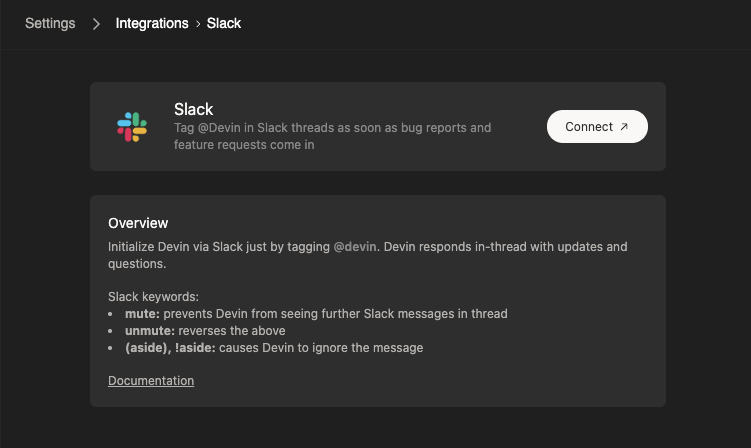
- You'll be prompted to install the Opulent app for Slack in your workspace
- Make sure to link your individual user. All users in your organization will need to complete this step to use Opulent.
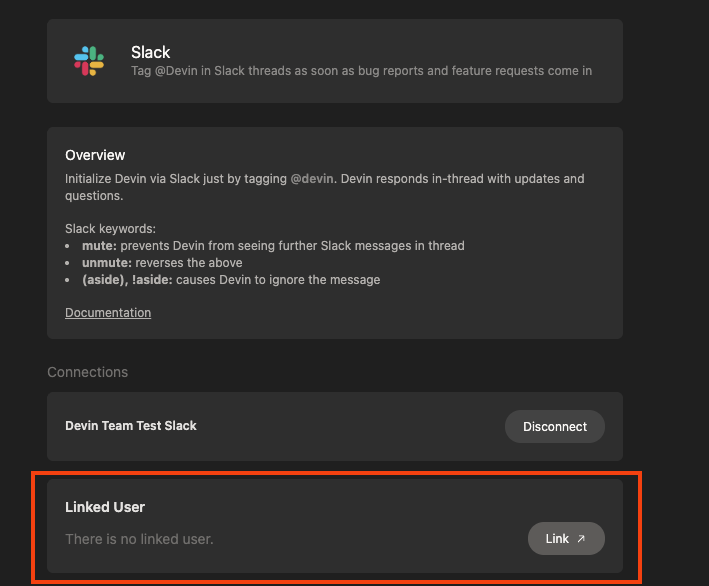
- Tag @Opulent in Slack to start a session
Note: If your user account is not properly connecting, ensure that your Slack email is the same as your email in https://platform.opulentia.ai/settings. If not, please authenticate the correct email on Slack.
How to use Opulent from Slack
Once you've installed the Opulent integration for Slack, simply trigger Opulent with @Opulent in any channel. You may include attachments to your message.

Opulent will respond in-thread to your session. Now, you can communicate back and forth as you would in the regular chat interface — ask follow-ups, share more context, or approve a proposed change right where the conversation is happening.
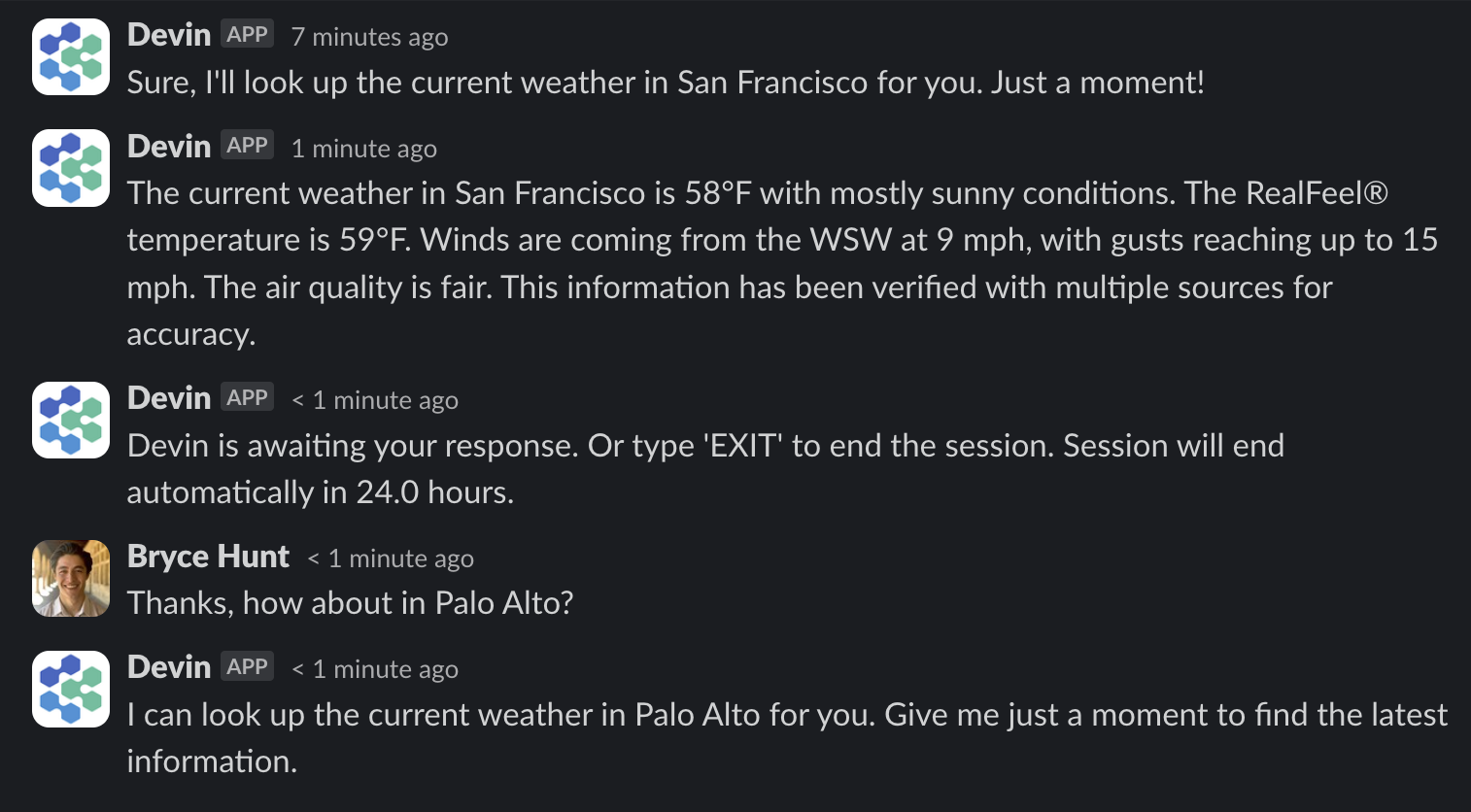
Note that Opulent may make mistakes. Please double-check responses.
Inline Slack Keywords & Functions
| Keyword | Function |
|---|---|
!ask |
begin your message with !ask to get a quick codebase answer without starting a full agent |
!deep |
get a deeper research answer using advanced search |
mute, @Opulent mute |
prevents Opulent from seeing further Slack messages in thread |
unmute, @Opulent unmute |
reverses the above |
(aside), !aside |
causes Opulent to ignore the message (useful for commenting on Opulent's run directly in-thread) |
sleep |
puts Opulent to sleep; to wake Opulent up, send any message in the thread |
archive, @Opulent archive |
puts Opulent to sleep + archives the session |
EXIT |
ends the session |
!data |
starts a Data Analyst session for database queries, data analysis, and visualizations |
!fast |
begin your message with !fast to start the session in Fast Mode for quicker responses on simpler tasks |
!ultra |
begin your message with !ultra to start the session in Ultra Mode for the most complex tasks |
!lite |
begin your message with !lite to start the session in Lite Mode |
!agent |
begin your message with !agent to switch an active session back to the default Agent mode |
!new |
begin your message with !new to force the session to start in a new thread |
![playbook_name] |
Attach a Playbook to a Session by referencing its name |
Mode keywords (!fast, !lite, !ultra, !agent) and !new are only recognized at the beginning of your message, right after the @Opulent mention. They can be stacked (e.g. @Opulent !ultra !new fix the bug). A keyword placed elsewhere in the message is ignored. Sending a mode keyword in an active Opulent thread switches that session's mode mid-session.
Turn on Slack Notifications
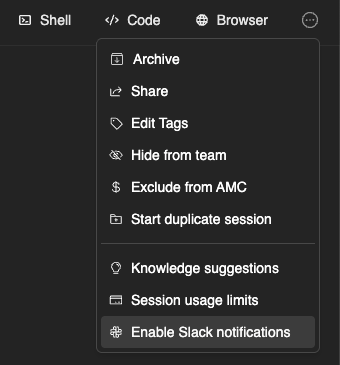
You can enable Slack notifications for specific sessions and Opulent will privately message you whenever there's a status update. To do so, simply click "Enable Slack notifications" in the menu at the top of any session. This is how you keep status posted back to the people who need it without watching the dashboard.
Dedicated Opulent channel
Set up an #opulent-sessions channel (or similar) to keep all Opulent conversations in one place. This helps your team collaborate on Sessions together, triage incoming requests in one queue, and draw inspiration for different use cases from each other.

How to Rename Opulent
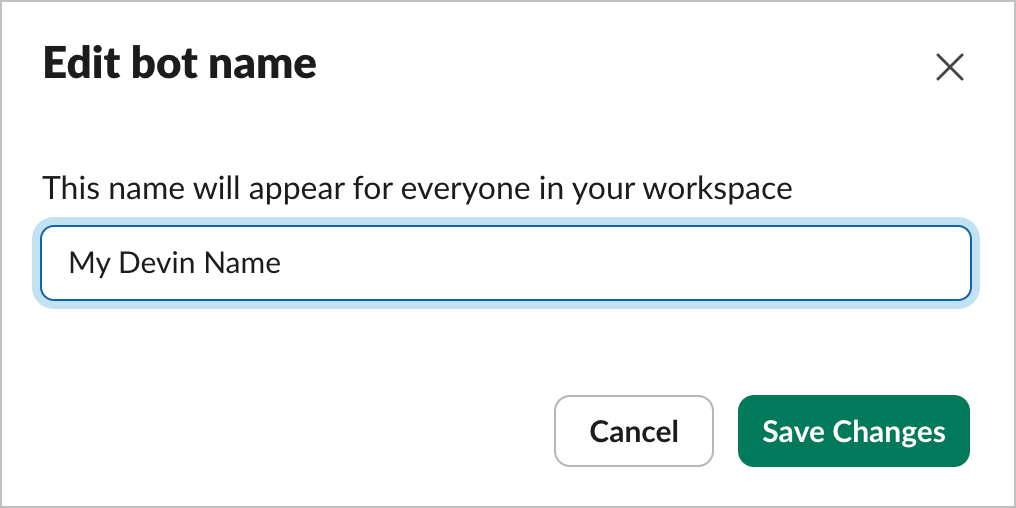
You may change Opulent's name in your Slack workspace by going to your Slack Workspace Admin panel -> Configure apps -> Installed Apps -> Opulent. Then click on App Details, and go to the Configuration tab of that page. If you scroll down you will find a section called 'Bot User' where you may change Opulent's name.
Pricing
If you don't yet have an Opulent account, you can learn more about pricing and plans here.
The AI assistant sidebar experience (app container) requires a paid Slack plan. All other Opulent features — @mentions in channels and threads, /ask-opulent, /data, and message shortcuts — work on any Slack plan, including free workspaces.
Privacy
Our privacy policy is available here.
Permissions Details
| Permission | Description | Rationale |
|---|---|---|
chat:write, chat:write.customize |
Send messages as @Opulent or using a customized username and avatar | Opulent has to be able to respond to user requests |
commands |
Add shortcuts and/or slash commands that people can use | Opulent might gain more interactive features in the future that will require different commands |
files:read, files:write |
Upload, edit, and delete files as Opulent | Opulent needs to manage files in order to send and receive attachments to/from the user |
channels:history, groups:history, im:history |
View messages and other content in channels, groups, and DMs that Opulent is in | Opulent has to access historical messages when it is launched inside of a message thread in order to retrieve the previous messages in the thread as context |
im:read, im:write |
Start direct messages with people and view basic information about direct messages that Opulent has been added to | Opulent needs to be able to initiate DMs in order to send users notifications via Slack |
reactions:write |
Add and edit emoji reactions | Opulent adds emojis to messages in order to mark runs as completed or failed |
remote_files:read, remote_files:write |
View remote files added by the app in a workspace | Opulent needs to manage remote files in order to send and receive attachments to/from the user |
users:read, users:read.email, users.profile:read |
View people in a workspace as well as their emails and profiles | Opulent needs to be able to match Slack users with Opulent users based on their email address |