How does Opulent fit into my existing workflows?
Understanding how Opulent slots into the way your team already works
Overview
Opulent integrates across your team's existing workflows—from understanding existing systems and planning changes to testing, reviewing, and shipping. Engineering is its strongest lane, and the same pattern carries into research, operations, and reporting: an Autonomous Knowledge Worker that plugs into the tools and review gates you already run, rather than a parallel process you have to babysit.
Where Teams Spend Their Time
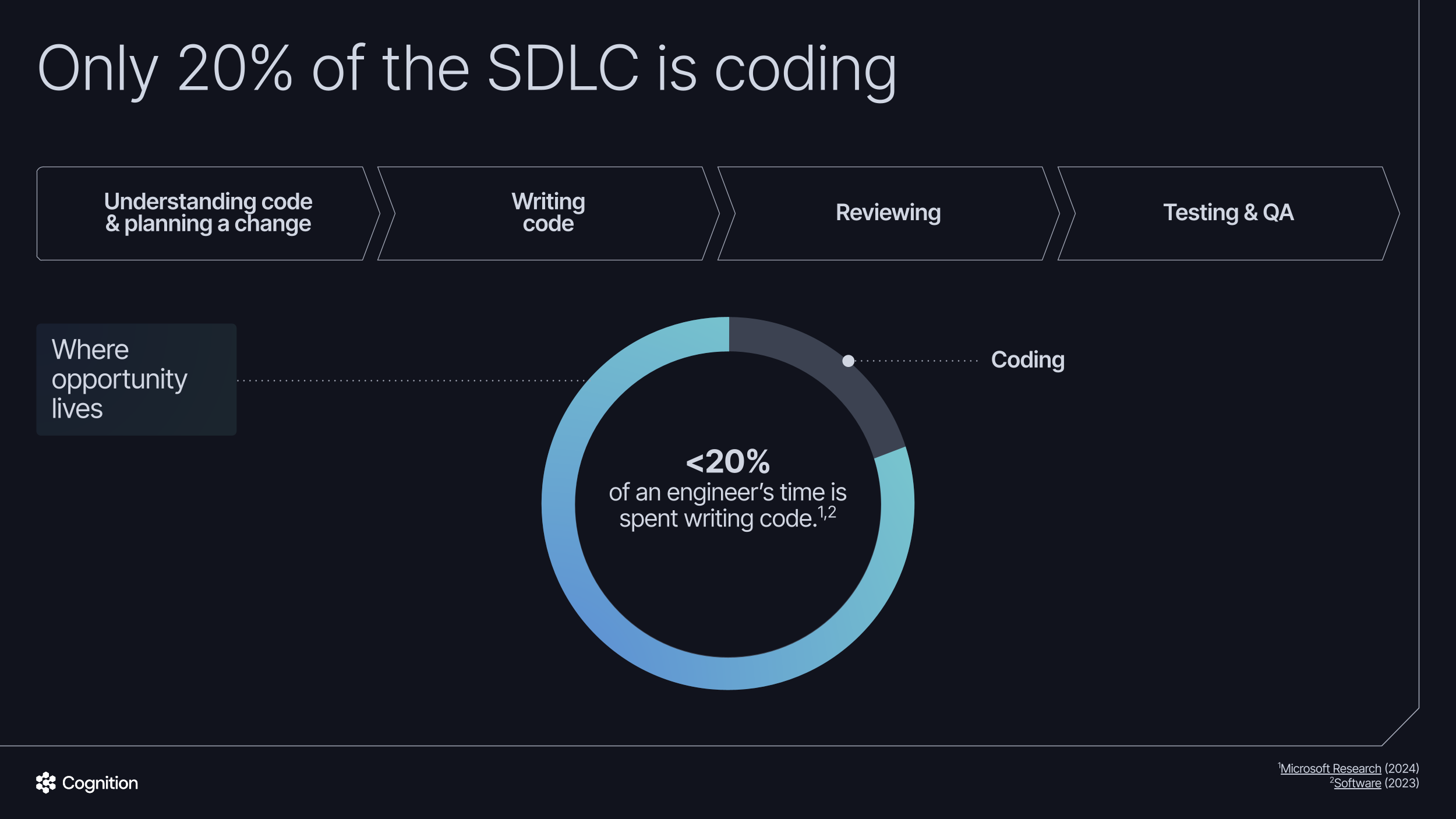
Research shows that less than 20% of an engineer's time is spent writing code (1, 2). The majority is dedicated to understanding systems, planning changes, reviewing work, and testing—and the same holds for most knowledge work, where gathering context and verifying results outweighs the final write-up. Opulent accelerates each of these phases while keeping humans in control.
Working Within Existing Processes
For engineering work, Opulent contributes to existing codebases by opening Pull Requests (or Merge Requests) containing its suggested changes. It is subject to the exact same branch protections and review policies as any human contributor—human reviewers approve before anything merges. Outside code, the same principle applies: Opulent produces drafts, reports, and proposed changes that route through your normal review and sign-off, never bypassing them.
Integration Points
Understanding Context & Planning
Before making any change, people need to understand existing systems and plan their approach. Opulent accelerates this phase significantly:
Exploring systems with Knowledge Map
Use Knowledge Map to navigate architecture and code with cited, navigable maps of your repositories. Knowledge Map is Partial today—deepwiki_search covers public GitHub repositories now, and generated wikis for private client workspaces are Planned. It makes complex systems and dependencies faster to understand.
Scoping and planning with Ask Opulent
Ask Opulent is the planned surface for querying your workspace directly—answering questions about structure and dependencies and helping you scope work before implementation. Treat it as a product target rather than a shipped Q&A feature today; the same scoping can be done inside a session in the meantime.
Task Scoping and Planning
Opulent can scope and plan tasks by analyzing requirements against your systems. When integrated with Jira or Linear, it can analyze tickets and help prioritize work.
Alert and Backlog Triage
Opulent can triage alerts and backlog items, categorizing issues and suggesting approaches. This helps teams prioritize effectively and reduces time spent on initial investigation.
Doing the Work
Opulent handles delegated work asynchronously, letting your team focus on higher-value activities:
Delegating High-Confidence Work
Delegate well-defined tasks to Opulent asynchronously. Opulent works in its own environment, preparing changes and submitting them for review. This is particularly effective for repetitive work that can be parallelized across managed agents and parallel child sessions.
Modernization and Migration
Opulent is well suited to large-scale modernization work—for example, migrating monoliths to modular components or executing systematic changes across many repositories. Break large efforts into focused sessions that build on each other.
Pull Request Preparation
Opulent prepares and submits PRs following your team's conventions. It automatically discovers PR and review templates in your repository—including Opulent-specific templates (opulent_pr_template.md) and standard GitHub/GitLab templates. You can customize the template Opulent uses without changing your human-facing default.
Testing
Opulent runs self-driven test loops in its own environment, improving coverage and catching issues early:
Test Generation
Opulent writes tests from human-provided playbooks, following your team's testing patterns and conventions.
Self-Driven Test Loops
Opulent runs tests in its own environment, iterating on the work until they pass. This includes running your existing test suites, linting, and type checking before submitting a PR.
Review
Opulent can provide automated first-pass reviews:
Automated review with Opulent Review
Opulent Review provides automated first-pass reviews on pull requests, checking for correctness and conformance with your organization's best practices. Opulent Review is Partial today; you can enable it on all PRs or only Opulent-authored PRs via your organization settings.
Auto-Fix
With Auto-Fix enabled, Opulent automatically responds to review comments, fixes flagged bugs, and iterates on CI failures—creating a closed loop where PRs iterate toward merge-ready quality without you in the loop.
Standards Enforcement
Opulent checks work against your coding standards, style guides, and security requirements, flagging potential issues for human reviewers to address.
Security and Compliance
Opulent can integrate into CI/CD pipelines to address findings automatically:
Vulnerability Remediation
Integrate Opulent into your CI/CD pipeline to respond to findings from static analysis tools like SonarQube, Fortify, or Veracode. When these tools flag an issue, Opulent can review and propose a fix for human approval.
Compliance Updates
Opulent can execute compliance-related changes across your systems. When new requirements call for updates across many files or repositories, it can apply the changes systematically for review.
Getting Started
To integrate Opulent into your workflows:
- Connect your repositories via GitHub, GitLab, or Bitbucket
- Configure branch protections so Opulent's changes go through your standard review process
- Set up integrations with Jira or Linear for ticket-based workflows, and Slack or Microsoft Teams to chat and collaborate with Opulent
- Create playbooks and knowledge to codify your team's patterns and standards for Opulent to follow
- Connect tools from the Connector Marketplace to extend Opulent's reach with approved MCP servers and native connectors
- Configure CI/CD integration to enable automated remediation and testing